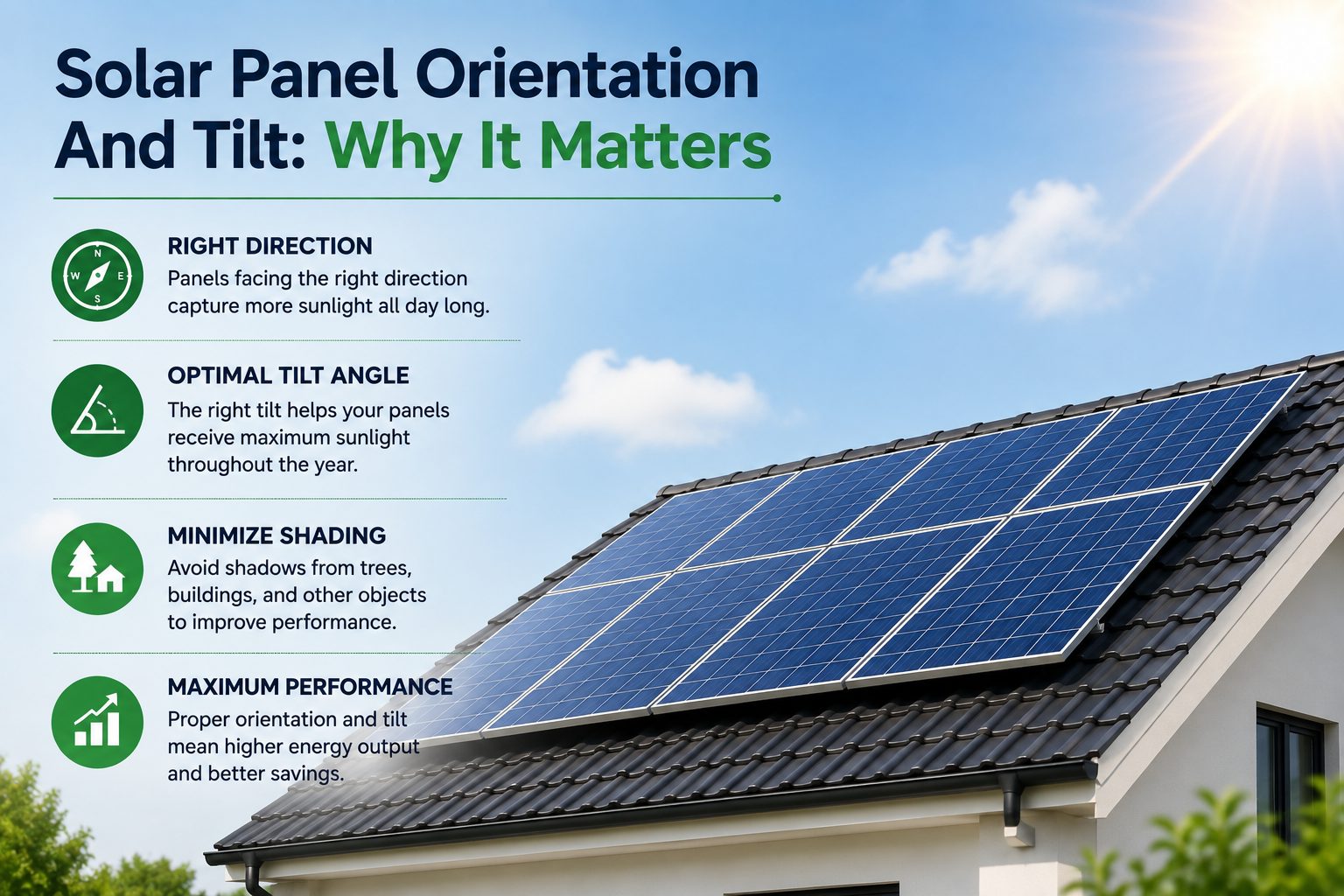
Solar Panel Orientation And Tilt: Why It Matters
Installing solar panels is not simply about putting them on the roof and connecting them to an inverter. The direction they face and the angle at which they are installed can affect how much sunlight they receive throughout the day. Getting these details right can help a solar system produce more electricity from the same set of panels.
⚡ Why Panel Direction Matters
Solar panels produce electricity when sunlight reaches their surface. The direction of the panels, often called their orientation or azimuth, determines how directly they receive sunlight at different times of the day.
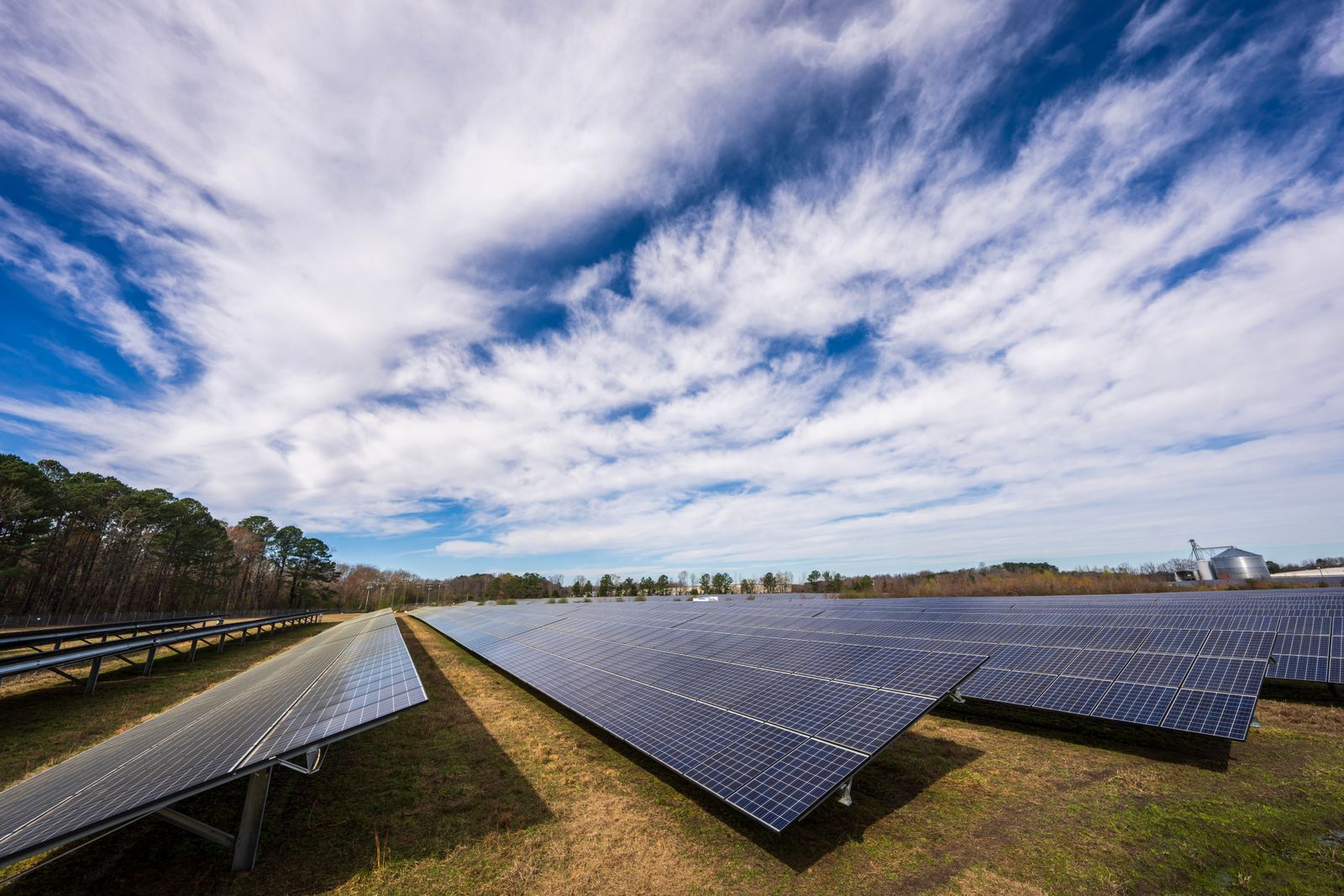
For fixed solar systems in the Northern Hemisphere, panels generally produce the most annual energy when oriented toward the equator. In many locations this means facing south, although east- and west-facing systems can also work well depending on the roof and when electricity is most needed.
⚡ Getting The Tilt Angle Right
Tilt is the angle of the panel compared with the ground. A suitable tilt allows the panels to receive sunlight more directly and can improve annual energy production.
A common starting point for fixed systems is a tilt close to the local latitude, but the ideal angle can vary with location and the goals of the installation. A lower tilt can favour summer production, while a steeper tilt can favour winter production.
⚡ Your Roof May Not Be Perfect — And That's Okay
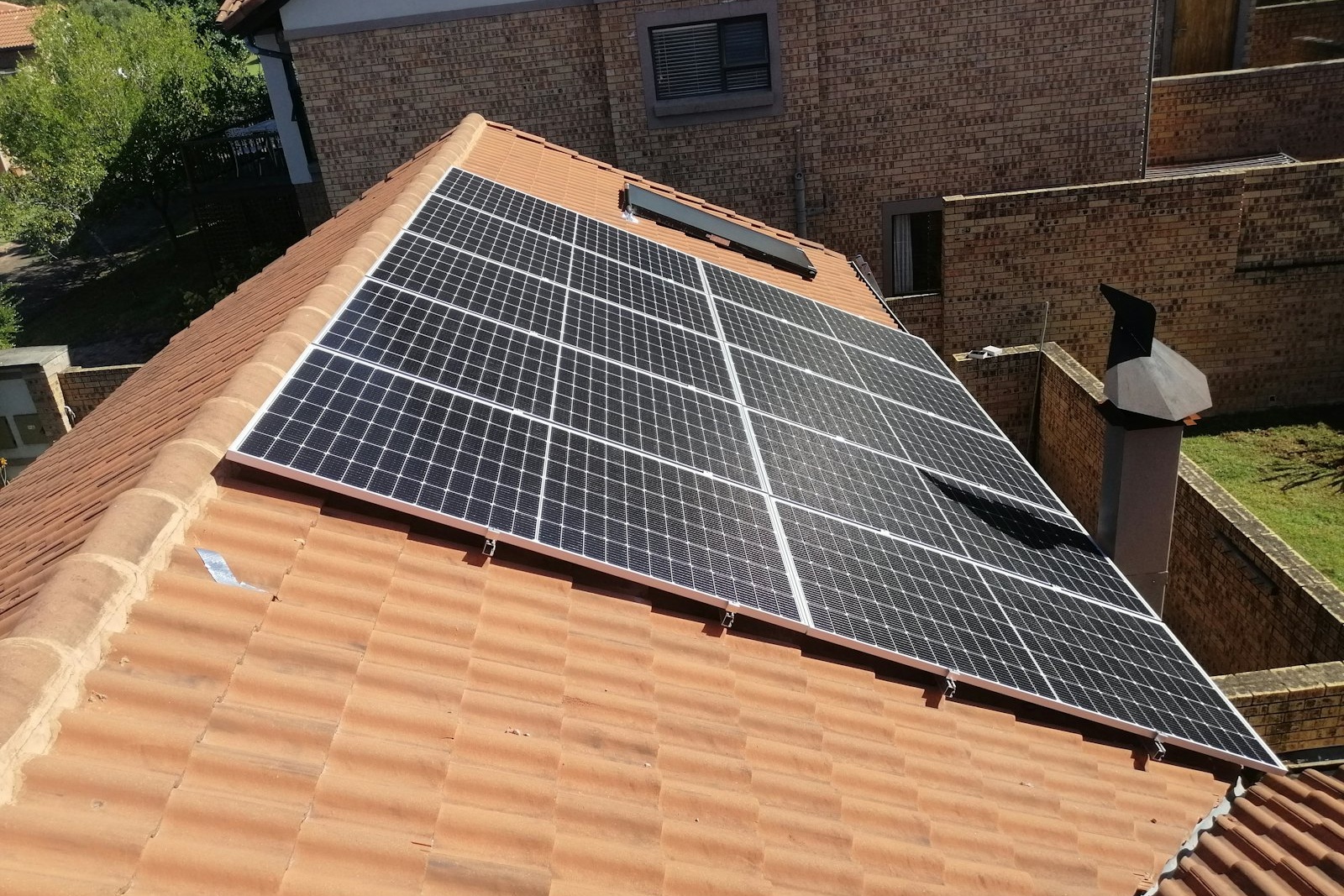
Not every house has a roof facing the ideal direction or sitting at the ideal angle. That does not automatically mean solar is unsuitable.
Roof shape, existing roof pitch, available space, nearby buildings, trees, chimneys, and other obstacles all need to be considered. In many cases, installers can work with the existing roof rather than trying to achieve a textbook angle.
⚡ Don't Forget About Shading
Even a well-positioned panel can lose production if it is regularly shaded. Trees, neighbouring buildings, water tanks, chimneys, and other rooftop structures can block sunlight during important parts of the day.
Before installation, the site should be checked for current and potential sources of shade. Keeping the panels in a clear, reasonably unshaded area is often more important than chasing a perfectly calculated tilt angle.
⚡ Orientation Can Depend On How You Use Electricity
The direction that produces the highest total annual energy is not always the only consideration. For example, an east-facing array can produce more electricity earlier in the day, while a west-facing array can produce more later in the afternoon.
This can matter for homes and businesses whose electricity demand is concentrated at particular times. EIA notes that west-facing systems can have an advantage during later daylight hours when electricity demand may be higher.
⚡ Consider The Roof And Local Weather Too
Solar mounting is not only about maximizing sunlight. The structure must also safely handle local conditions such as wind and heavy rain. In some climates, a steeper tilt can help shed snow or hail, while increasing wind loads can create another design consideration.
That is why the final mounting angle should be chosen as part of the overall system design rather than based on a single rule.
A Small Detail That Makes A Big Difference
The right orientation and tilt can help a solar system make better use of available sunlight, but there is no universal angle that works for every property. A good installation considers the location, roof design, shading, weather, electricity usage, and the overall system layout.
Before installing solar panels, have the site properly assessed. A well-planned system can make the most of your available roof space and deliver reliable solar generation for years to come.

Comments (0)
No comments yet. Be the first to comment!